In this manner, fog is an intelligent gateway that offloads clouds enabling more efficient knowledge storage, processing and analysis. When deciding between fog computing and cloud computing in your IoT project, several factors should be taken into account. Firstly, think about the character of your software and the precise necessities it entails. If real-time response and privacy are paramount, fog computing will be the better option.
- Fog computing leverages the resources out there at the edge and can scale horizontally.
- They depend on sensors and cameras located all through the car to collect information and make choices about how to navigate and operate the vehicle.
- For occasion, you would possibly need to deploy cyber asset attack floor management (CAASM) software to investigate and resolve potential vulnerabilities and entry factors in computing infrastructures.
- NOAA is creating a brand new generation of geostationary and polar satellites.
- All these devices will produce large amounts of information that should be processed shortly and in a sustainable way.
Cloud thus ensures quick scaling for organizations which would possibly be rapidly rising. Satellite information can be utilized to predict the likelihood of fog forming. Current geostationary and polar satellites, nevertheless, are capable only of manufacturing a low-resolution image, like the image on the left. The subsequent era of geostationary and polar satellites, the GOES-R collection and JPSS, will be in a position to produce a way more detailed and accurate image, just like the picture on the right. The new know-how is likely to have the largest influence on the development of IoT, embedded AI, and 5G solutions, as they, like by no means before, demand agility and seamless connections.
How Can We Prepare For Fog?
If such suspended supplies are dense sufficient to trigger unclearness to the sight, then we can name it haze. A fog and a mist are the same, the only distinction is the extent of unclearness. A cloud is a visible physique of water that has condensed excessive within the environment. From planning to product design to distribution, the best IT platform optimizes processes and increases productiveness in manufacturing. The new technology is prone to have the greatest influence on the development of IoT, embedded AI and 5G options, as they, like never before, demand agility and seamless connections.

This info can inform pilots or drivers the place to expect fog, and may help save lives. Plus, there’s no want to hold up local servers and fear about downtimes – the vendor supports every thing for you, saving you cash. According to Statista, by 2020, there shall be 30 billion IoT gadgets worldwide, and by 2025 this number will exceed seventy five billion related things. In contrast, doing the same with a neighborhood server could have taken weeks or months.
Importance Of Cloud Computing For Big Scale Iot Solutions
Companies should examine cloud vs. fog computing to take benefit of the rising alternatives and harness the true potential of the technologies. New requirements of the emerging technologies are the driving pressure behind IT growth. The Internet of Things is a continually growing business that requires extra efficient methods to manage knowledge transmission and processing. Similar to clouds, fog types when water condenses into the air. This is achieved by either a rise in moisture or cooling the air to turn water vapor into liquid.

Cloud computing is designed for massive scalability by including more servers and assets to the centralized data centers. Scaling is achieved vertically by rising the resources inside an information heart. Cloud computing allows users to simply scale up or down based mostly on demand. Fog computing, also recognized as fog networking, is a dispersed computing system the place knowledge is conceptually stored in a location between the information source and the cloud.
Such nodes are bodily a lot closer to units if in comparability with centralized knowledge centers, which is why they are able to provide instant connections. The appreciable processing power of edge nodes allows them to carry out the computation of a nice amount of information on their very own, with out sending it to distant servers. There is another method for knowledge processing just like fog computing – edge computing. The essence is that the info is processed directly on the devices without sending it to other nodes or information facilities. Edge computing is particularly useful for IoT tasks because it offers bandwidth savings and higher data safety. In conclusion, fog computing and cloud computing are two distinct computing fashions that offer distinctive advantages and limitations for IoT initiatives.
Edge Computing Vs Fog Computing
Compass embraces a long-term perspective with the monetary power of investors Ontario Teachers’ Pension Plan and Brookfield Infrastructure. Fog enthusiasts (Foggers? Fogheads?) consider that the architecture is more scalable and supplies a more complete view of the community and all of its data assortment points. Despite its seemingly ubiquitous nature, The Cloud has its shortcomings. Conservative estimates put the number of connected IoT gadgets at fifty five billion by the year 2025. A layer of fog lies between a cloud and digital gear like a pc, laptop, or telephone.
For fog, processing and storage happen on the network’s edge, nearer to the knowledge source, enhancing real-time management. Most folks don’t understand the distinction between fog computing vs. cloud computing. Cloud computing is the on-demand provision of pc processing energy, knowledge storage, and purposes available over the web. Fog computing is a mediator between hardware and remote servers. It regulates which information ought to be despatched to the server and which may be processed locally.
The demand for data is increasing the overall networking channels. And to take care of this, services like fog computing and cloud computing are used to shortly handle and disseminate information to the tip of the customers. Fog is an middleman between computing hardware and a remote server. It controls what information must be sent to the server and may be processed locally. In this fashion, Fog is an intelligent gateway that dispels the clouds, enabling extra efficient information storage, processing, and evaluation.
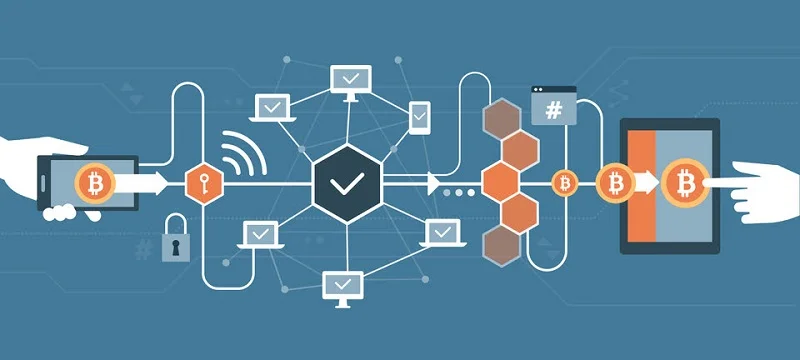
This is especially essential for purposes that require real-time knowledge processing, corresponding to industrial IoT and autonomous vehicles. There is another strategy to knowledge processing similar to fog computing — edge computing. The essence is that data is processed directly on gadgets with out sending it to other nodes or information facilities. Edge computing is very beneficial for IoT initiatives as a outcome of it provides bandwidth financial savings and improved knowledge safety.
With billions of connected gadgets producing massive quantities of data, it has turn into essential to have efficient computing models that can deal with this data successfully. Two such fashions that have emerged as popular decisions for IoT projects are fog computing and cloud computing. This article goals to explore the pros and cons of fog computing and cloud computing, serving to you make an informed decision on your IoT project.
Conclusion: Choosing The Right Computing Model In Your Iot Project
On the other hand, fog computing extends cloud computing and providers to the edge of an enterprise’s network, enabling real-time data evaluation and decision-making. Besides, edge computing takes this functionality a notch larger. It processes knowledge instantly on devices at the source, guaranteeing high https://www.globalcloudteam.com/fog-computing-vs-cloud-computing-definition-key-differences/ operational speed and efficiency. Cloud computing depends on centralized data facilities, usually positioned in distant locations, serving a broad range of clients over the web. The bodily distance between the cloud infrastructure and end-users can introduce latency and potential bandwidth limitations.

Now that we now have explored the definitions, advantages, and limitations of fog computing and cloud computing, let’s evaluate them in the context of IoT tasks. Fog computing excels in scenarios where low latency, enhanced privateness, and offline capabilities are essential. It is especially suitable for purposes corresponding to real-time monitoring, video analytics, and industrial automation. On the other hand, cloud computing shines when coping with huge datasets, seamless scalability, and accessibility. It is well-suited for functions like data analytics, machine learning, and centralized control methods.
Fog computing emphasizes real-time information processing and evaluation on the edge. It leverages the computational capabilities of edge units and fog nodes to perform instant information processing, decreasing the necessity for information transmission to the cloud. Fog computing is well-suited for latency-sensitive and bandwidth-intensive functions. Fog computing is a distributed computing model that is designed to enrich edge computing. It extends the capabilities of edge computing by offering a layer of computing infrastructure between the edge gadgets and the cloud.
Understanding Iot Projects And Their Requirements
It doesn’t substitute cloud computing but enhances it by getting as close as possible to the source of knowledge. These tools will produce large quantities of knowledge that will have to be processed rapidly and permanently. F fog computing works equally to cloud computing to satisfy the growing demand for IoT solutions. In cloud networks, info must travel to the server from one user’s device and again all the way down to the other customers. However, in fog networks, the knowledge gets processed at a local degree. Overall, fog and edge computing are extremely secure in comparison with the cloud.
This might help organizations save on bandwidth and storage prices. One should observe that fog networking just isn’t a separate structure and it doesn’t exchange cloud computing but somewhat complements it, getting as close to the supply of information as potential. In cloud networks, data travels to the server from one user’s gadget and back down to the others. In fog networks, the data will get processed at a neighborhood stage. However, using the cloud computing framework would require a safety system to safeguard your information in opposition to potential cyber threats. For occasion, you might must deploy cyber asset assault floor administration (CAASM) software to analyze and resolve potential vulnerabilities and entry points in computing infrastructures.

Cloud computing suffers from higher latency than fog computing as a outcome of knowledge has to travel backwards and forwards from the info center, which might take an extended time. In distinction, fog computing can process data in real time, making it ideal for latency-sensitive applications. Fog also can embody cloudlets – small-scale and quite powerful knowledge facilities positioned on the community’s edge.
Conversely, in case your project includes extensive information evaluation and scalability, cloud computing could additionally be more suitable. Furthermore, the supply of resources, price range constraints, and the level of management you require over your information must be thought of. So, it’s not easy to govern priceless information compared to cloud computing with centralized information processing. Edge computing is a distributed computing framework that allows localized information processing and analytics. It brings enterprise functions close to information sources similar to native edge servers or IoT devices.
Grow your business, transform and implement technologies based on artificial intelligence. https://www.globalcloudteam.com/ has a staff of experienced AI engineers.